Bunny visits Mrs Brooks and steals her wedding ring
The Death of Bunny MunroBunny’s visit to Mrs Brooks brings his work as a beauty-products salesman into direct collision with bereavement, mounting terror, and a deliberate act of theft. He arrives expecting a customer, finds an elderly woman instead of the figure he had imagined, and momentarily treats attentive service as a success. But as his perception of the room changes and his dead wife, Libby, seems to appear, the performance of charm gives way to rage. Bunny ultimately leaves with Mrs Brooks’s wedding rings in his pocket, turning an encounter that had offered him a fleeting sense of decency into another breach of trust.
The visit and the sales performance
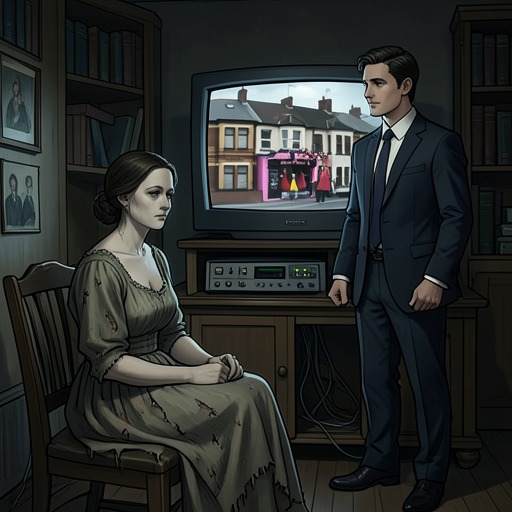
At a ground-floor flat in Charles Street, Kemp Town, Bunny hesitates over why he has come. Through the window of the Yellow Fiat Punto, Bunny Junior watches him; at the door, Bunny sees a shifting shape behind the frosted glass and hears the locks and chains being opened. The name on Geoffrey’s customer list is Mrs Candice Brooks. Seeing it, Bunny feels a surge of anticipation, but the person who answers is a very old, small woman wearing dark glasses. The mismatch between his expectation and the customer before him briefly unsettles his purpose. He has to recover his composure and present himself as charming and in control before explaining that he has come to sell.
Bunny demonstrates Replenishing Hand Cream and presents it as a restorative product. Mrs Brooks is skeptical, then removes her rings and offers her hands. He massages cream into her knotted knuckles, and she responds warmly to the attention, saying it has been many years since someone had done that for her. As Bunny completes the order form, he thinks he has excelled: he has sold her a large quantity of products she will never use, but believes that he has also made her happy. His judgment holds both a recognizably humane observation and a self-serving excuse. He registers her pleasure, yet measures the encounter through the sale he has secured.
Satisfaction gives way to fear
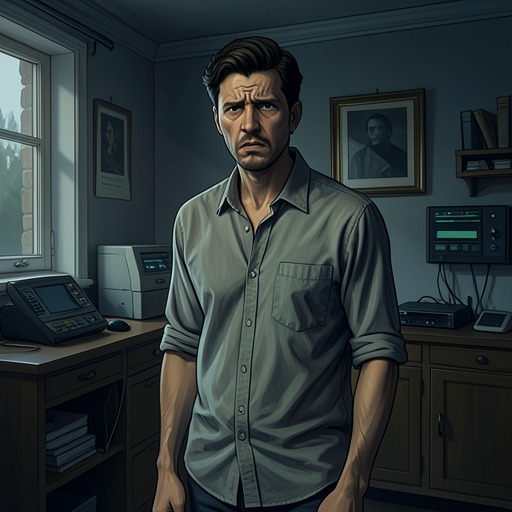
The moment of apparent success does not settle Bunny. His silver bracelet clinks as he fills in the form, and he feels restless and uncomfortable, a sensation he had attributed to a hangover. Looking through the window, he sees Starlings moving above the sea and recognizes the feeling as terror, though he cannot identify its cause. The distinction matters: what he had treated as an ordinary physical aftereffect now seems to announce something he cannot control.
Bunny becomes convinced that, if he looks toward the Bösendorfer Piano, he will see Libby sitting on its stool. In this vision she wears the nightdress associated in his mind with both their wedding night and her suicide. An orange shape and a raised arm enter the edge of his vision; the radio stops, the room seems to darken and cool, and the overhead light crackles. He hears heavy piano chords and covers his ears. The account presents these events through Bunny’s perception rather than establishing an independent supernatural presence. His terror is bound to the sense that Libby continues to confront him, even after death, with the marriage and loss he cannot escape.
Rage and the theft
As the disturbance intensifies, Bunny’s distress turns into anger directed at nearly everyone and everything he can name: Libby, Mrs Brooks, Bunny Junior waiting outside, his father, women, bees, and the Starlings. He condemns his own appetites, but cannot shift his attention away from the pressure of the scene. Mrs Brooks takes his hand and offers a plea for human solidarity. Bunny does not answer her compassion with a confession or an apology. He keeps his gaze lowered, while she notices his sadness and apologizes for upsetting him.
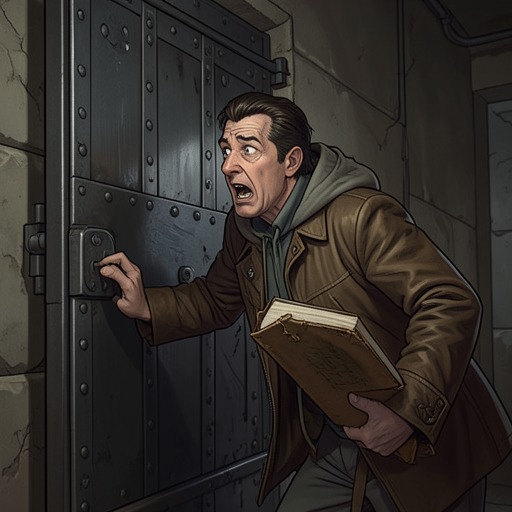
When Bunny stands to leave, he tells Mrs Brooks not to see him out. He then quietly gathers the wedding rings from the table and slips them into his jacket pocket. The act is distinct from the sale that precedes it: his considerate handling of her hands and the care with which he completes the order form have helped create a moment of trust, but he exploits that trust to take something personal. He turns toward the piano stool and sees it empty, with the air appearing to shift as the vision of Libby departs. He pats his pocket and leaves, refusing the possibility of repair that the encounter might have offered.
Context and significance
The visit belongs to a wider pattern in which Bunny tries to define himself through salesmanship, confidence, and command. Elsewhere, he imagines a tree as an image of deep roots and sturdy growth while speaking to Bunny Junior; at another point, he pressures his son to choose between school and learning the business. Bunny’s father later reproaches him for failing to carry on the business he was taught. Against that family history, the Mrs Brooks visit shows the limits of Bunny’s professional identity: he can make a sale and briefly persuade himself that he has done good, but neither achievement governs what he does next.
The scene also sharpens the distance between Bunny’s performance of control and his actual conduct. He attempts to recover a composed sales manner at the door, believes himself successful after Mrs Brooks responds to his attention, and then confronts a crisis he cannot master. The theft of the rings is not presented as a consequence of a plan disclosed to the reader; it occurs as he is leaving, quietly and deftly, amid the emotional upheaval. That contrast gives the encounter its decisive turn: Bunny’s recognition of another person’s loneliness coexists with his willingness to take advantage of her, while his grief over Libby remains unresolved and offers no protection against further harm.